chapter 8

"Going Home"
Taken by Life Magazine photojournalist: Ed Clark
From what I can see from looking at this image are some people mourning over the loss of FDR, someone they felt was near and dear to them. Mostly women, a few men and in particular one black man with tears rolling down his face as he plays the accordion to the audience. I interpret the image as a sad moment to all that are their on the porch. But there are others who have a look on their faces like what's the big issue of why are some you crying and some really look like they are bored and can't wait for this to be over. It means to me that this is a real funeral for anyone you should respect that and show some emotion, not tears as much as sorrow for whom this sad occasion is for . The family would appreciate it.
Donald Weber said "The Rules of Photojournalism Are Keeping us From the Truth". Just because it looks like photojournalism , doesn't mean it is Photojournalism. Too Slick To Trust said by Donald Weber " A technically proficient image that looks like those of the past photojournalist will catch the eye. A technically proficient image may trick you into thinking he or she is seeing something of substance, of what is commonly referred to as truthful. Commodified imagery threatens photographers primary role as storytellers". This could be the main reason photojournalism has changed so much from the early years. However back then photo were staged as well.
Using three principles from the Photographic, Artistic, and Compositional Principles. Rules of thirds:I choose this because the main subject is off center, and the photojournalist choose not to put the main subject in the middle. The Background: distracts in this image you have the poles that are in the way therefore you have a detracts from composition. Even though these are mourners you can't see most of them due to the focus of the Black man playing the accordion. Of course the image is in black and white: to give you that edge of sadness in its purest form The photographer could have used color but the effect would have been there for this photo. Also during the death of FDR color wasn't used to often but using color would given the image a different effect
Image source:.https://cdn.fstoppers.com/styles/large-16-9/s3/lead/2017/06/occupy-wall-street.jpg
Photo by: Wasim Ahmad. Image A Truth, This photo to me is the truth because it's a common scene between the police of New York City (and any other major city in American) therefore to me this photo is the truth. This was taken from The New York Times article title: " Photojournalism is for white men".
With the image A Truth the image I choose with the truth compares with some images from the Majority World article from the assignment: "opening doors, opening minds, using this for truth makes one come to reality". By using photos from other parts of the world make sense because my photo was a reflection of saying is that photojournalism only for white men. As we know female photojournalist do exist and have played a huge roll in photojournalism, only a few still just exist even in 2019. For example there was Betty Lange :" Feminist Photojournalist Arresting Images" would show Betty searching for the truth with her attending rallies of feminist leaders such as , Bella Abzug, Gloria Steinem, and Betty Friedon. As said in Professor Nordell content, "What sells newspapers or drives viewers to online sites"? Usually bad news. Our brain evolves to always be on the lookout for threats and danger." Many of the images we see in this course depicts bad news".In my opinion this works for stories to be published and images to be taken.This peaks our interest because the human brain gets excited about images that show tragedies such as war police brutality. It makes our hearts pump faster and our eyes move much faster. This could be the "How do you know what you know use of" Sense Perception, which basically states you know certain things because see and perceive them yourself. "

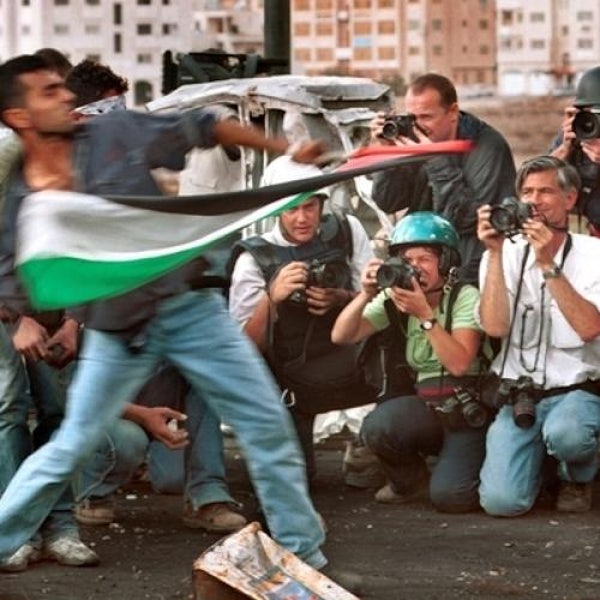
This photo is not true or not truth because there no reference to the situation at hand This simply means that photojournalism has gone to the way side. It appears that photographers will take picture of anything to get that story. Has the "Code of Ethics" gone to the way side as well. This is a difficult area to imagine because most photos taken from a different angel could give you a different picture. Is this truth? I don't see this image as the complete truth. Flags are very important to all countries and to destroy this one makes no sense. But this is my idea of what truth is.
This photo I choose for the" Not Truth" , The Rules of Photojournalism Are keeping us from the Truth. Photojournalism the ethic, the act of reportage through story and images, has been hijacked under the guise of "photojournalism" style. Where the style denotes the truth objectivity,righteousness, infalliability,etc. At what point did the act of making images subvert the idea of what" Photojournalism"is to be? Not truth photo. My explanation of what is all about being true to "fake news" wanting the image to put you on the map. As this relates to "Yellow journalism" you can think about all the other newspapers that are out there like the New York Post. Yellow journalism can be somewhat board because it tells parts of the truth. However it sensationalize it close to being not the truth. This photo I used was a subject with photographers around taking pictures of someone destroying a flag.With the rule of fake news you could see how someone my not believe this image. With this point of " How do you know what you know"? In this case it maybe of Emotion/intuition, you know certain things because you feel the emotionally. You know that certain thing may not be ethically right. Photojournalist have it pretty had these days because has to get uout look good because if not some other not so qualified photojournalist will get the story and run with it.
The Photographic, Artistic , and Compositional, Principles for image I felt was true Depth of Field only because the focus here is with the police and how they treat certain people within this photo. Exposure time with how the fast shutter speed capture the image in almost slow motion to get all of the activity around the situations Las is the image is in color. I think I have gone toward black and white photo for the grittiness that they create, but you can clearly see in this photo the impact of using color gave the image a up to date look that black and white would not have done. This was with the image I used for the truth image.
As for the image with the "Not Truth " has an In or out of focus" right at the beginning of the photo it has no sharpness of the subject but of the photographers and photojournalist that are taking this not truth image. There is "Depth of field because it is focus on the photojournalists and the main subject who happens to be in the front. The buildings in the background are somewhat out of focus as well. The last one I would use is that this picture is in color. The color makes impact to this image, however for this one if the photojournalist wanted a gritty look black and white would have been a better impact on what I felt the fake images was showing.


Comments
Post a Comment